

Golf Etiquette: Keeping the Pace of Play Moving
A smooth round of golf isn’t just about skill — it’s about respect for the game and others on the course.

Be Ready When It’s Your Turn
One of the easiest ways to keep the game moving is simply being ready. While others are hitting, take your practice swings, choose your club, and be prepared to step up and play without delay.
Staying ready when it’s your turn is one of the simplest ways to keep the game enjoyable for everyone.

Be Efficient When Searching for Your Ball

After your tee shot, it’s important to go directly to your ball—or begin looking right away if it’s not clearly visible. In a foursome, time can add up quickly if everyone is searching for golf balls at the same time.
Keep your search brief and focused. If your ball can’t be found within a reasonable amount of time, it’s best to move on and keep play moving. Being mindful during these moments helps maintain pace and keeps the round enjoyable for everyone.
“We’ve all been there—but keeping it moving matters.”
Taking Relief

You’ve found your ball, but it’s simply not playable.
Sometimes the lie, your stance, or the situation makes the shot more difficult than it needs to be. Spending extra time trying to force a low-percentage shot only slows down the round.
Take a moment, assess the situation, and be honest with your options. If the shot isn’t there, take relief within a club length—no closer to the hole—and move on.
Playing smart keeps the game moving. Not every shot needs to be perfect—just get back in play and keep the round flowing.
Reset and Execute

You’ve found your ball.
You’ve taken relief.
Now comes the part that defines your round.
After a bad lie or a tough break, it’s easy to carry frustration into the next swing. But the best players—especially during The Masters Tournament—don’t dwell on what just happened. They reset.
Take a moment.
Pick your target.
Commit fully to the shot in front of you.
No second guessing. No half swings.
Whether you're punching out to the fairway or going for the green, the key is commitment. A confident, simple swing will always beat a hesitant one.
Golf isn’t about perfect shots—it’s about the next shot.
Play Smart from Where You Are

Once you’ve hit your shot, etiquette shifts from your game to the group’s flow.
Be Aware of Your Position
Not every shot finds the fairway—and that’s part of the game. Whether you’re in the rough, a bunker, or faced with a difficult lie, the key is to stay composed and make smart, efficient decisions.
Take a moment to assess your situation, choose the right club, and commit fully to your shot. Avoid overcomplicating things or attempting low-percentage plays that can quickly turn one mistake into two.
Smart golf isn’t about being aggressive—it’s about knowing when to take the simple, high-percentage option and keep the round moving forward.
Play within your limits, trust your decision, and focus on positioning yourself for the next shot rather than forcing the perfect one.
Golf rewards patience and punishes impatience—play the shot that keeps you in the game.
Commit and Execute

Once you’ve made your decision, the next step is simple—commit and execute.
Doubt and hesitation can undo even the smartest plan. Standing over the ball unsure of your club or target often leads to poor contact and unnecessary mistakes. Trust the decision you’ve made and focus on making a smooth, controlled swing.
You don’t need a perfect shot—you need a committed one.
Keep your routine simple. Step in, stay focused on your target, and follow through with confidence. A consistent approach not only improves your results, but also helps maintain a steady pace for everyone on the course.
A committed swing with a clear target leads to more consistent results.
Bunker Play and Care

Your next shot looked solid, but the ball found the bunker. It happens to every golfer, regardless of skill level. What matters next is how you approach the situation.
After committing to your shot and executing it, the result is not always perfect. A bunker shot introduces a new challenge that requires both patience and awareness. Instead of frustration, take a moment to assess the situation.
Before stepping into the bunker, think about your entry point. Enter from the lower side whenever possible to avoid damaging the bunker edge. Small details like this show respect for the course and help preserve conditions for everyone playing behind you.
The bunker is not simply an obstacle — it is part of the game’s strategy. Staying composed and making smart decisions can turn a difficult lie into a manageable recovery shot.
Once the ball has been played, your responsibility is not finished. Proper bunker care is an important part of golf etiquette and helps maintain consistent conditions for every golfer on the course.
Before leaving the bunker, take a moment to look back at the area you disturbed. Footprints, swing marks, and displaced sand should be smoothed over to restore the surface.
Use the rake to level the sand in the area where you stood and where the club entered the bunker. Work in a steady motion, removing deep grooves and evening out the sand so the next player is not left with an unfair lie.
Taking an extra few moments to care for the bunker shows respect for the course, the grounds crew, and the golfers playing behind you. Golf etiquette is built on leaving the course in as good — or better — condition than you found it.
“Smart Cart Placement: The Overlooked Key to Faster Play”

You’ve played your bunker shot and are heading toward the green—now what? One of the most overlooked parts of golf etiquette is where you place your cart.
Why it matters
Pace of Play
Consideration for Others
Avoiding Unnecessary Backtracking
Where to park (the practical part)
Park between the Green and the nest Tee
Never Block the Front of the Green
Think Exit Strategy, Not Convenience
What to avoid
Parking Directly in Front of the Green
Leaving your Cart on the Wrong Side
Walking back Across the Green after Putting
Smooth Transition for Pace of Play
Good cart placement means once you finish putting, you can move quickly to the next tee without slowing anyone down.
Like many things in golf, it’s a small habit that makes a big difference.
On the Green: Respect the Surface and Finish the Hole
After navigating the fairway, rough, hazards, and bunkers, every golfer eventually reaches the most delicate part of the course — the green. The putting surface is where good rounds can be saved and careless habits can quickly affect the experience for everyone behind you.
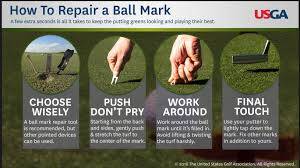
One of the first things golfers should pay attention to on the green is ball marks, often called divots or pitch marks. When a golf ball lands on the green from a high shot, it can leave a small dent in the surface. Repairing these marks is one of the simplest and most important responsibilities in golf etiquette.
Using a divot repair tool, gently push the edges of the mark inward toward the center rather than lifting upward. Once repaired, lightly tap the area flat with your putter. A properly repaired ball mark can heal quickly, while an unrepaired one may take weeks to recover.
Beyond repairing your own mark, many golfers make a habit of fixing one or two additional marks they notice nearby. Small actions like this help keep the course in excellent condition for everyone.
When preparing to putt, remain aware of where other players’ putting lines may be. Avoid stepping directly in the path between another golfer’s ball and the hole whenever possible. Soft spikes and proper footwear help minimize damage, but being mindful of foot traffic on the green is still important.
Pace of play also matters once everyone reaches the green. Be prepared to putt when it is your turn, but without rushing unnecessarily. Many casual rounds now use “ready golf,” where players safely putt when prepared rather than strictly waiting for honors. Keeping things moving helps everyone enjoy their round.
Finally, once the hole is complete, exit the green efficiently and move toward the next tee before recording scores or cleaning clubs. Small habits around the green can make a significant difference in pace of play and overall course care.
Golf is built on respect — for the game, the course, and fellow players. Few places on the course reflect that respect more than the putting green.
Readiness and Tee Box Etiquette
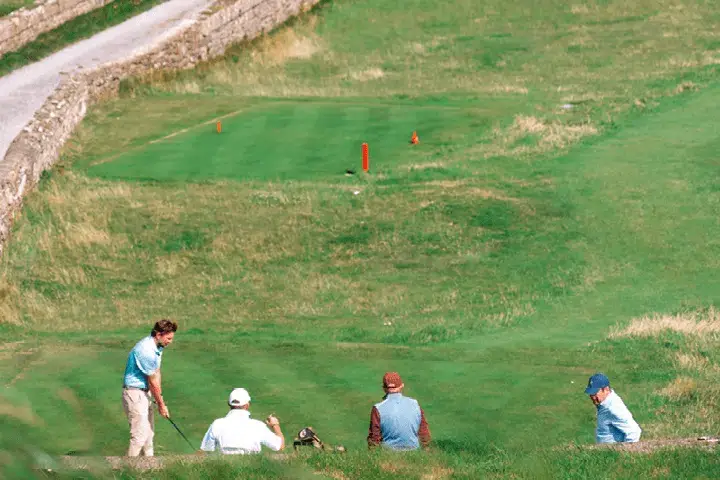
You have finished the hole and are now heading to the next tee box. This is where preparation and awareness begin again. Whether your group is playing traditional honors or using ready golf, players should be thinking ahead before it is their turn to hit.
Players should always use the correct tee markers that match their skill level and intended yardage for the round. Once on the tee box, stand in a safe position away from the player hitting and remain still and quiet during the swing. Proper positioning shows respect and helps maintain concentration for everyone in the group.
Practice swings should help prepare for the shot, not delay play. A couple smooth rehearsal swings are usually enough to loosen up and build confidence. Spending too much time over the ball can slow the group down and create unnecessary tension before the shot.
Every player in the group should help watch tee shots whenever possible. Following the ball flight helps identify landing areas, speeds up searches, and reduces the chance of lost balls. Paying attention after the shot is a simple habit that keeps pace of play moving efficiently throughout the round.
Good readiness on the tee box keeps the pace moving, helps everyone stay focused, and creates a better experience for the entire group. Being prepared, respectful, and efficient before the shot is ever hit is an important part of proper golf etiquette.
Good pace of play does not mean rushing other golfers

One of the easiest ways to show consideration on the golf course is respecting the space around the tee box. While keeping pace is important, driving carts directly up to the next tee while another group is preparing to hit can become distracting and make players feel rushed. A better approach is to hang back at a respectful distance until the group ahead has finished teeing off and moved on. Good golf etiquette is about awareness, patience, and understanding that everyone deserves the chance to focus on their shot.
Good golf etiquette means keeping pace while still respecting the players around you.
Knowing When to Let Others Play Through

Golf is more enjoyable when groups can play at a comfortable pace. Sometimes a group may be learning the game, searching for balls, or simply playing slower than those behind them.
Signs it may be time to let a group play through:
- The group behind is consistently waiting on every shot.
- There is open space ahead of your group.
- The group behind is playing noticeably faster.
The courteous approach is simple:
- Finish the current hole or wait at a safe location.
- Signal the faster group to come through.
- Allow them to hit and move ahead before continuing.
Letting a group play through is not admitting defeat or poor play. It's simply good golf etiquette and helps everyone enjoy their round.
A few minutes spent allowing a faster group to play through can make the round more enjoyable for everyone on the course.
If You Are the Group Playing Through

Being invited to play through is a courtesy extended by another group, and proper etiquette calls for both appreciation and efficiency. A simple wave or thank you goes a long way in acknowledging the gesture.
Many golfers feel a little nervous when playing through. Suddenly, several players are watching your shots, and it can feel like there is pressure to perform. Don't worry about hitting the perfect shot. Focus on playing safely and keeping the process moving.
Once you begin playing through, make every effort to complete that hole efficiently. Play ready golf when appropriate, limit practice swings, and avoid hitting extra balls if you hit a poor shot. The goal is not to rush, but to move ahead and create separation from the group that graciously allowed you through.
After completing the hole, continue at a pace that allows you to catch up to the group in front of you. If you are unable to gain ground and remain caught between groups, the benefit of playing through may be lost. Respecting the courtesy you've been given helps maintain a smooth pace of play for everyone on the course.
Help Watch and Find Golf Balls
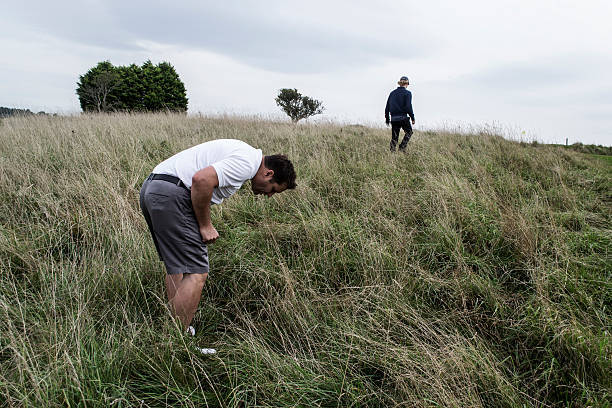
One of the simplest ways to contribute to a smooth and enjoyable round is by helping watch and locate golf balls. When your playing partners are hitting, take a moment to follow the flight of the ball whenever possible. Even a well-struck shot can take an unexpected bounce, and an errant shot can be difficult to find without an extra set of eyes.
Paying attention to each shot not only helps speed up play, but also shows consideration for the other golfers in your group. A ball that is quickly located means less time searching and more time playing. This can be especially helpful when a shot enters the rough, tree line, or other areas where visibility is limited.
Golf is a shared experience, and helping one another keep track of shots is a small gesture that benefits everyone. By staying engaged and assisting when needed, you can help maintain pace of play and make the round more enjoyable for the entire group.
Know When to Pick Up

Every golfer has experienced a hole that seems to go from bad to worse. A tee shot finds trouble, an approach misses the green, and before long frustration begins to build. While every player wants to finish every hole, there are times when picking up your ball and moving on is the best decision for both your group and the golfers behind you.
Many casual rounds, leagues, and friendly games use a maximum score per hole to help maintain pace of play. Even when a maximum score is not in place, golfers should be aware of how much time they are spending on a single hole. If your group is falling behind and you are already well over par with little chance of improving your score, it may be time to pick up and proceed to the next tee.
A good rule of thumb for recreational golfers is double par. If you have reached a score of 6 on a par 3, 8 on a par 4, or 10 on a par 5 and have not finished the hole, consider picking up your ball and moving on. While different leagues and competitions may use their own scoring limits, double par provides a reasonable benchmark that helps keep play moving and prevents a single difficult hole from delaying the entire course.
- Par 3 → 6
- Par 4 → 8
- Par 5 → 10
Knowing when to pick up is not an admission of defeat. It is a recognition that golf is played on a shared course where everyone's time matters. A single hole should not hold up an entire course.
This is especially important for newer golfers. There is no embarrassment in picking up after a difficult hole. In fact, many experienced golfers appreciate players who understand when to move on and keep the round enjoyable for everyone.
Good pace of play requires sound judgment. Sometimes the smartest shot you can make is knowing when the hole is over and preparing for the next one.